
Key Takeaways
- The doll reflects autistic representation in a considered way, developed with autistic advocates and featuring tools like AAC, noise-cancelling headphones and fidget accessories that align with real access needs rather than token add-ons.
- Inclusive toys influence how children understand belonging, helping autistic children feel seen while building familiarity and respect among peers for different communication and regulation styles through everyday play.
- By normalising sensory and communication supports such as AAC and noise management, the doll reinforces that these are access needs rather than “extras,” helping reduce stigma across schools, workplaces and community spaces.
Barbie introduced the “autism Barbie doll”. Although we love the concept, we prefer to describe it as a Barbie doll representing a person living with autism.
That distinction is not “just semantics.” In the disability sector, language is one of the fastest ways we either widen the door to inclusion, or quietly close it. Autism is not a costume, a trend, or a personality type. It is a lived experience, and it shows up differently for different people.
So when Mattel announces its first Barbie representing a person living with autism, created with guidance from the autistic community and in partnership with the Autistic Self Advocacy Network (ASAN), we pay attention.
Because this one is not surface level.
Not a token accessory, the details are intentional
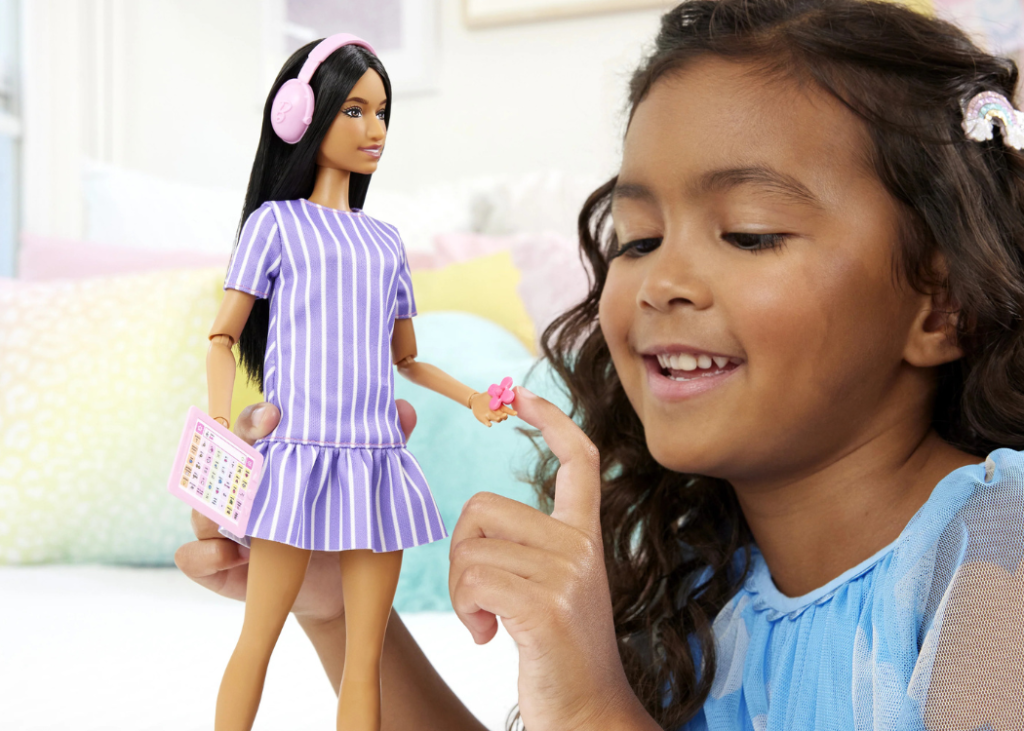
Let’s get practical, because this is where the conversation gets real. This doll includes sensory and communication supports, and design choices that reflect common experiences for some autistic people.
Key features and accessories include:
- A fidget spinner style accessory
- Noise cancelling headphones
- An AAC style communication tablet
- Flexible joints at wrists and elbows to support common hand movements and gestures
- A softer side gaze, reflecting that direct eye contact can be uncomfortable for some autistic people
Mattel has said the doll was developed over more than 18 months with ASAN. That matters, because authentic representation does not happen in a rush, and it definitely does not happen without listening.
Why representation in toys matters, especially in disability inclusion
Toys are not just toys. They are early lessons about who belongs.
Kids notice who get to be seen and who gets left out. Inclusive toys help children learn, early and naturally, that disability and neurodiversity are part of everyday life.
For children living with autism, that can feel like a quiet relief: I exist here too.
For siblings, classmates, and peers, it can help build familiarity and respect: this is one way a person communicates, self regulates, or moves through the world.
This is inclusion that does not require a formal training session. It is simply there, on the shelf, in the playroom, in the storyline.
Sensory supports are not “extras,” they are access
In the disability sector, we talk about access all the time, but sensory access is still misunderstood.
Noise cancelling headphones are not a fashion moment. For many autistic people, they are a practical tool for coping with environments that can feel painfully loud or overwhelming.
A fidget tool is not “a distraction.” It can be a self regulation strategy.
Flexible joints are not “quirky design.” They allow play that reflects common repetitive movements and gestures that can support regulation.
When these supports are normalised in play, we reduce the stigma that often follows people into school, workplaces, public spaces, and community settings.
Communication is a human right, and AAC deserves visibility
One of the strongest inclusions here is the AAC style tablet. Mattel explicitly frames it as an Augmentative and Alternative Communication tool.
That is a big deal, because too many people still treat communication as “speech only.” In real life, people communicate through AAC, through Auslan, through visuals, through text, through devices, through support people, and through time.
In an NDIS context, communication is not a nice to have. It is the foundation for choice, control, consent, and participation.
Seeing AAC reflected in mainstream toys helps shift public understanding from “why don’t they just talk” to “how do they prefer to communicate.”
Yes, the comments section is mixed, and that is not a problem
There has been celebration and criticism, sometimes in the same breath. Some people feel seen. Others worry it could reinforce a narrow stereotype of autism, because one doll can never represent the full spectrum of autistic experience.
That nuance is healthy.
Inclusion should invite conversation, not shut it down. The goal is not to declare this doll perfect. The goal is to acknowledge progress while still asking for broader, more diverse representation next.
Two things can be true at once:
- This is a thoughtful step forward, especially given the partnership with autistic advocates.
- We should keep pushing for representation that reflects more of the community.
What we would like to see next in inclusive toys:
If brands want to do inclusion properly, the next step is not one single “inclusive doll.” It is a whole world where difference is expected.
Here is the wishlist:
1. More variety within autism representation
Different sensory profiles, different communication styles, different cultural backgrounds, different interests, different support needs.
2. More communication options across dolls and playsets
AAC tools, visual schedules, key word sign, and storylines where communication is supported, not questioned.
3. Inclusive environments, not just individuals
Accessible playgrounds, quiet spaces, sensory friendly classrooms, visual signage, and community settings designed with universal access in mind.
4. Disability representation that goes beyond the obvious
Hearing supports, vision supports, mobility aids, chronic health conditions, and invisible disability representation that does not rely on a single “look.”
And our only other thought, where’s Ken?
Because if Barbie can carry sensory supports and an AAC device, Ken can absolutely learn to ask before he turns the music up.
#Kenough
A quick note on language
You will see different preferences, including identity first language (autistic person) and person first language (person living with autism). ASAN commonly uses identity first language. Best practice is simple: follow the preference of the person you are speaking with.
Final thought
This doll will not capture every autistic experience, and it should not have to. The win is that mainstream toys are starting to reflect the world as it is, not as a narrow slice of it.
Progress deserves recognition, especially when it is informed by the community it represents.
Your turn: what would you like to see next in inclusive toys, and what details would you insist they get right?